
Does Social Media Marketing Actually Bring in Customers?
You are posting consistently for months and months, a few likes begin to trickle in, and you begin to wonder if any of them are ever going to convert to paying customers. That doubt is fair. Many owners experience it.
In this guide, you’ll get a truthful answer to the question Does social media marketing work for a small business?, plus learn what it can and can’t do, and how to make it benefit real sales, not just likes. The truth is that the amazing thing about social is that they introduce you to people. Deloitte’s 2025 State of Social Research found that 61% of consumers discovered a new brand or product on social media in the past year, which is exactly the kind of indirect groundwork social media is built for, not a straight line from post to purchase.
Here’s what this covers:
- What social media can and cannot do
- Why likes are not the goal
- How to make social support sales
- Which platforms and how often
Does social media marketing actually bring in customers?
The indirect aspect of social media marketing is that it helps build trust, awareness and recall that will compel people to choose you when they are ready, but it rarely does so on its own a combination with search, a strong site and follow-up is most effective.
That’s not a knock on the platform. After all, that’s the point of social media. When someone is scrolling they are not in buying mode, and a post doesn’t actually sell a product in real time. It plants a seed instead, a little brand awareness and engagement now, trust later, until the person needs what you sell and already knows your name. That’s the honest answer to does social media marketing work, and it fits into the bigger picture covered in the digital marketing services a small business needs, since social rarely works as a standalone channel. It’s one piece next to search, a site built to convert, and the follow-up that closes the loop.
| Goal | Social’s role |
|---|---|
| Direct sale from one post | Rarely, that’s not what it’s for |
| Awareness of your business | Yes, this is the strength |
| Trust before someone buys | Yes, built over time |
| Staying top of mind | Yes, until they’re ready |
| Replacing search or a website | No, works alongside them |
Why does not social sell directly?
People don’t come to the app to shop, they come to the app to kill five minutes or catch up with friends. This is not a time when a post will usually lead to a sale. It only warms the person up and when it’s time to purchase, your name sounds familiar.
What is social actually great at?
Establishing trust, remaining visible. Quality, relevant posts reveal a genuine business behind the blog’s name. You’ll be fresh in the mind when the time comes to purchase, as opposed to a fresh search result.
Why are likes and followers not the real goal?
The actual measure of social media should be the number of profile visits, clicks, messages and booked customers, rather than likes and followers, because the latter do not pay the bills.
A thousand likes is a positive number but doesn’t give you much information. It’s easy to like, easy to forget, and it’s like a scoreboard that puts a lot of social media for business efforts chasing a number.
It’s sometimes the platform and not the strategy that’s the issue. Attention is different on each of these platforms, and it will never be as successful as posting the right content on the right platform. But Which social platforms to use are actually more important than most owners realize because the same post can flop on one app, while another owner’s post can really convert, depending on who’s actually there.
If the bigger picture is not, either, then this is not all that important. Social is one of several channels, and it’s important to observe how it fits in the bigger picture before evaluating it alone. In the context of how to get more customers online all of it comes together with the followers.
If you don’t know what numbers are important for your business, that is a very normal place to be. This is because you can always get a realistic social plan for what you’re trying to do this quarter, rather than trying to guess which metrics you should be tracking each week.
| Vanity metric | Better metric |
|---|---|
| Total likes | Profile visits from actual prospects |
| Follower count | Click-throughs to your site |
| Impressions | Direct messages and inquiries |
| Shares | Booked appointments or sales tied to social |
What should I actually measure?
Track real-world actions that are directly connected to a number: profile visits, link clicks, messages, sales and any booking that can be attributed to social. These are the cues a person gave to indicate they were thinking of you.
Are followers worthless?
Not bad, just too high. There are times when a smaller band of followers, but your kind of customers, is better than a large band of people who are never going to buy your products. Size is not a factor here, it’s quality.
How do I make social media support real sales?
You make social media support sales by posting content that builds trust and answers real questions, guiding followers to your site or DMs, and pairing organic posts with paid social when you want faster, targeted reach.
Platform and schedule are not as important as content strategy. Posts that answer real questions, show your work, or share a genuine result build trust fast. Those posts that are all about “buy now” are doing the exact opposite because people don’t pay attention to constant self-promotion. The first is used for social media marketing for small business, while the second should be used more sparingly.
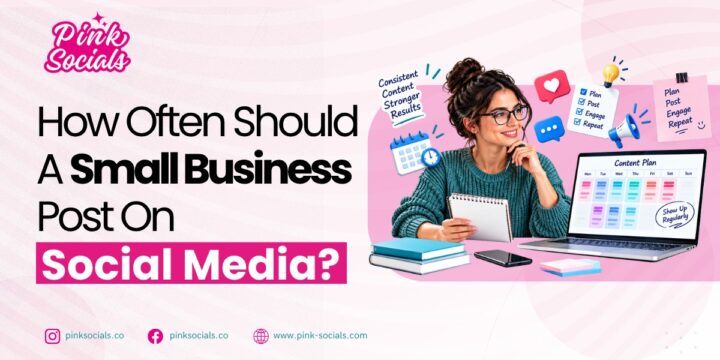
How often you actually post matters too, though it probably matters less than most owners assume before they’ve tested it themselves. The details of how often to post on social media are covered in the article, but the short answer is consistency is better than volume. A business that appears regularly a few times per week generally performs better than one that appears daily for a month, and then goes away.
The content, timing and platform all have to be right and that takes trial and error, and most owners do not have the time to be a social media strategist as well as the owner of the business. You can observe how social media is managed for you planning, posting and tracking the time-consuming aspects of a busy owner doing it all themselves.
Organic posting builds the foundation, but it has a ceiling. Paid social is worth adding once you want faster, more targeted reach than organic reach alone will give you, since a boosted post puts you in front of the right audience instead of waiting for the algorithm to find them. Are paid ads worth it for your specific business? It is worth working through before committing any budget. Paid social is an accelerator on top of a working organic base, not a replacement for one, and it only pays off once the content and conversions underneath it are solid.
If you’d like to have someone else do the paid social work for you instead of doing it yourself in addition to all your other work, see our Meta Ads service to see what that would look like in practice and creating high-quality targeted campaigns takes ongoing testing that’s difficult to do on the side of all your other work.
| Activity | Purpose | Next step |
|---|---|---|
| Trust-building posts | Builds credibility over time | Keep posting consistently |
| Answering real questions | Removes hesitation before buying | Guide them to your site or DMs |
| Organic reach | Grows your base for free | Layer paid social once it’s working |
| Paid social | Faster, targeted reach | Boost proven content, not guesses |
What content actually helps?
Posts that help someone, answering a common question, showing real work, sharing a genuine review, build more trust than any promotional post ever will. Save the self-promotion for the rare announcement actually worth it.
When should I add paid social?
After your organic content starts working, and you’re looking to reach more audiences in a quicker time than just the algorithm will do it. Paid social is best leveraged when it’s a complement to something that is already working, not when it’s trying to lift a non-performing piece of content.
Conclusion
Social media marketing attracts customers slowly through building trust and recall over time, not a simple “post and pray” approach. It’s best complemented with search, a site that converts and real follow-up when someone reaches out. Don’t judge based on likes, judge by profile visits, messages and booked customers. Post first, then promote.
Leave a Reply