
Can an AI Chatbot Answer My Customers’ Questions?
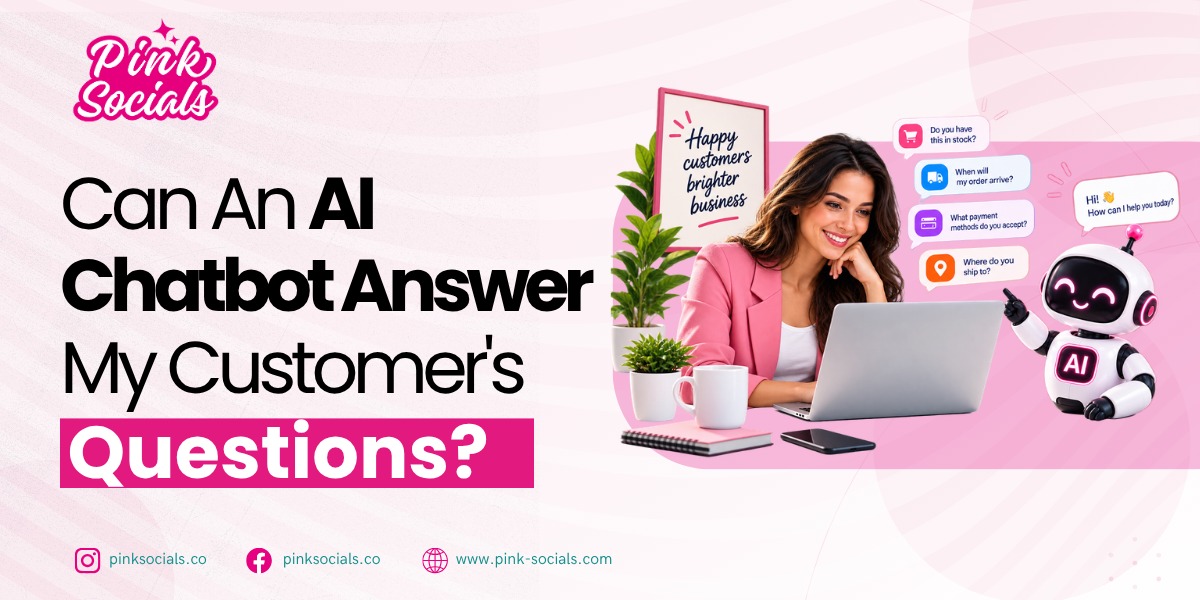
There was a time when old website chat widgets were used to make business owners believe that the worst would happen: a menu that was always the same, never quite answering the question, and then a long wait for something to be typed back. Who can say if the new AI versions are really different, or just a fast version of the same dead end?
This guide will answer whether an AI chatbot for small business actually resolves the questions of your customers. What can and can’t modern AI chat do? How can an AI chat make a helpful conversation into a captured lead on your own website? The technology has progressed quicker than most owners are aware. Gartner predicts that by 2029, agentic AI will autonomously resolve 80% of common customer service issues without human intervention, cutting operational costs by roughly 30% along the way. In fact, even something that’s simpler today is dealing with a significant portion of that routine, repetitive task, which is what most small businesses need an AI chatbot to do.
Here’s what this covers:
- What an AI chatbot can actually answer
- What it cannot and should not do
- How it captures leads while it helps
- Where it fits on your website
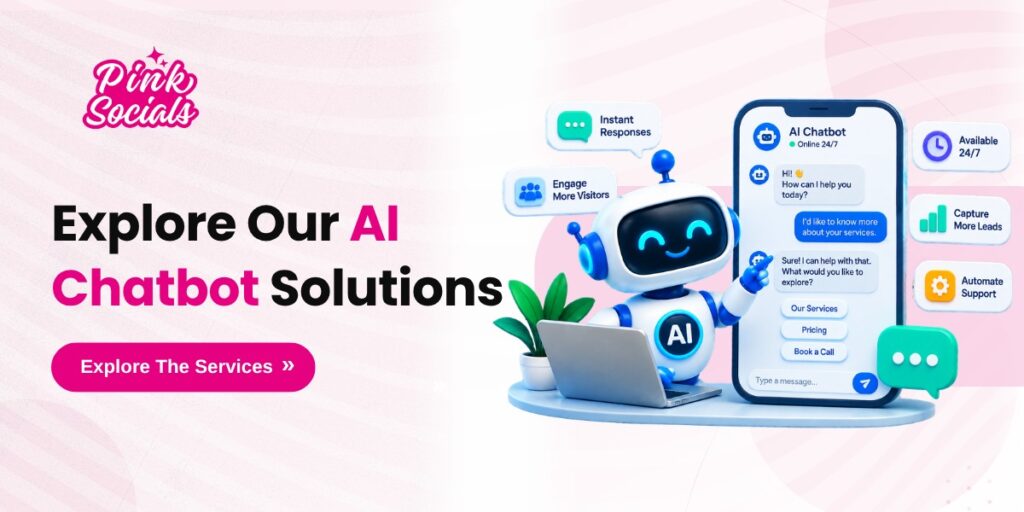
Can an AI chatbot answer my customers’ questions?
Yes, a modern AI chatbot can answer most common customer queries instantly, for instance, your hours, services, pricing ranges, how to book, etc., because it has access to your business information to provide accurate, conversational answers at any time of day.
This is not a dumbed-down FAQ page, posing as being smart. A well-set-up AI chatbot for small business handles the same repetitive questions a front-desk person answers a dozen times a day: what time you open, whether you serve a certain area, what a service costs, and how to actually book it. It’s true 24/7 support and true FAQ automation what used to be a “watch the site 24/7” thing. It’s a good fit into how AI helps a small business get more customers, in a more widespread way, since answering a visitor’s question when they ask it is one of the easiest, quickest wins in that larger strategy.
But if no one is asking questions, all this is moot, so it’s worth considering where visitors are getting from before taking the decision to think that chat will solve engagement. If a substantial amount of your visitors are coming from sources other than search, then it’s worth doing some research to determine whether social media marketing actually works for your particular type of business if they’re not there, then a chatbot can’t answer their questions.
| Question type | Handles well? |
|---|---|
| Hours and location | Yes, instantly |
| Pricing ranges | Yes, when the info is current |
| Services offered | Yes, clearly and consistently |
| Booking availability | Yes, can check and schedule |
| Complex custom requests | Better handed to a person |
What questions does it handle well?
The pattern is quite uniform in business. Some repetitive, factual information hours, services, price ranges, location, whether you’re open on a holiday is answered instantly and the same way each time, without having to type the same reply a hundred times this week!
How accurate is it?
This is a true statement, but only as good as what it has been given. A chatbot with your true hours, pricing and services provides the correct answer. If one leaves it running on outdated info, it will confidently provide an incorrect response, and it’s not a tech issue, it’s a setup one.
What can an AI chatbot not do?
While an AI chatbot might be able to do some, it is best to have it respond to the common questions quickly and seamlessly pass on anything complicated and sensitive to a human, and never pretend that it can do everything.
All useful website AI chatbots are transparent about their scope of work. It’s not software that’s complicated, it’s not software that’s sensitive, it’s not software that has to be customized based on the details that a form can’t capture. The good setups identify where they are good and understand to pass the puck to another player rather than guess or stall.
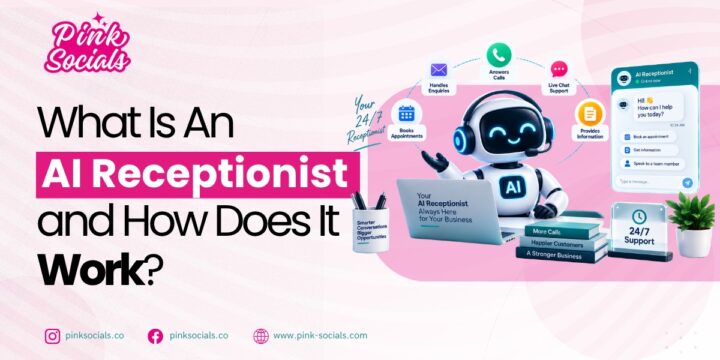
Phone calls suffer from the same restrictions as chat, and it is important to understand that it’s not that the two channels are completely different; it’s just that they have different limitations. What an AI receptionist is covers the same capability-and-handoff logic applied to your phone line instead of your website, since both tools are solving the same problem: answer what’s routine, escalate what isn’t.
| Request type | AI or human? |
|---|---|
| Hours, pricing, services | AI handles it |
| Booking a standard appointment | AI handles it |
| Complaint or dispute | Hands off to a person |
| Custom quote with unusual details | Hands off to a person |
| Anything sensitive or urgent | Hands off to a person |
When should it hand off?
The trigger isn’t complexity for its own sake; it’s confidence. The moment a question touches something sensitive, a refund dispute, a safety concern, anything where a wrong guess actually costs the customer, a well-built chatbot hands off rather than answering with false certainty.
Will customers be annoyed?
Not if it’s built well. The frustration people remember from older chat tools came from being stuck, not from talking to software. A chatbot that provides answers and that passes the ball to another one when it doesn’t is likely to irritate anyone, as the alternative it replaces was often none at all.
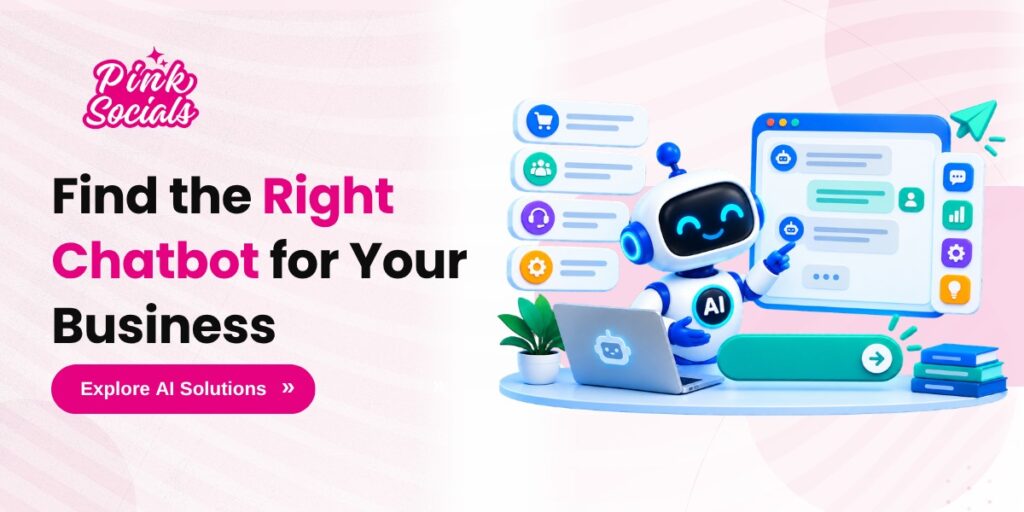
How does an AI chatbot capture leads while it helps?
An AI chatbot gathers leads as it answers a visitor’s question and invites them to book, obtain a quote, or provide their contact information. A helpful conversation turns into a captured lead, rather than a visitor who leaves quietly.
The technology is not the key; it’s the sequence. And it’s truly the concept of AI chat for customer service that works well. A visitor asks a question, receives an honest answer and then at the very moment when they are in a trusting frame of mind, the chatbot suggests the next logical step: book an appointment, get a quote, or leave a number for a callback. That’s lead capture that doesn’t feel like lead capture, since the visitor was already engaged instead of being interrupted by a popup, and that’s exactly what drives conversion.
Seeing the actual flow tends to explain this better than any description of the mechanics ever could, so it helps to look at it directly. You will be able to see how AI chat works on your website, not as a standalone and awkward request to book, but rather as part of a normal conversation.
Capturing the lead is really only half the job, too. The page the chat sits on still has to do its part, since what makes a website convert matters just as much as the conversation itself; a chatbot on a confusing or slow page will still lose visitors before it ever gets the chance to answer anything.
Chat isn’t the only channel doing this kind of work, either. If phone calls receive the same number of questions as your website does, see our AI Receptionist service and compare the two side by side; many small businesses find themselves using both, instead of one or the other.
| Step | What the chatbot does |
|---|---|
| Visitor asks a question | Answers instantly using your business info |
| Visitor gets a real answer | Builds trust in the moment |
| Chatbot offers next step | Invites booking, a quote, or contact details |
| Visitor takes the step | Becomes a captured lead, not a lost visitor |
| Anything unclear comes up | Hands off to a person |
How does helping turn into a lead?
It’s just a matter of time, but that’s the key. Unlike other forms that ask for contact information first, the chatbot responds first, asking for contact details only after the visitor has received some useful information. People are ready to take the next step at that time.
Where should chat appear?
Not all pages are required to be the same. It’s a good fit on pages where people already have questions and are nearing a decision, like pricing pages, service pages, and booking pages, as opposed to a page that they have to look for.
The bottom line
A small business AI chatbot can respond to the most common queries as they happen, pass over any unusual or sensitive requests to a live person, and convert a helpful conversation into a lead, rather than a visitor turning around and walking out the door. The only way to prevent it from becoming frustrating and unhelpful is to be honest about what it cannot do. Begin with the most common questions that visitors ask: hours, pricing, availability, and so on.
Leave a Reply