
Are Facebook and Instagram Ads Effective for Small Businesses?
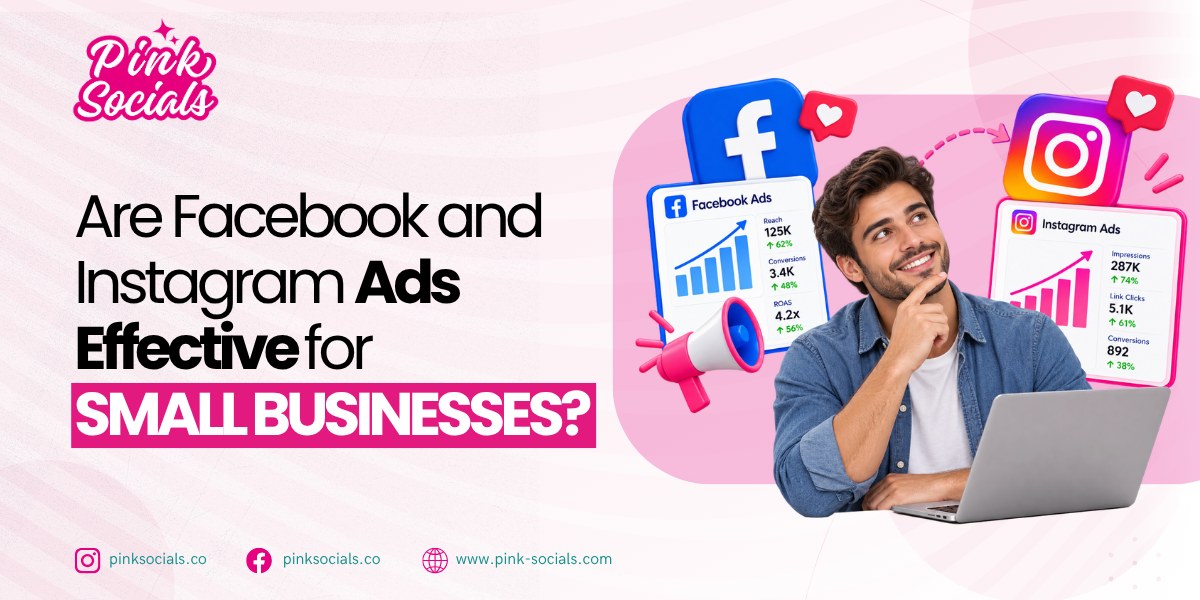
Every year, someone declares Facebook ads dead. Yet small businesses continue to use Facebook and Instagram to generate enquiries, introduce products, and stay in front of potential customers. The real question is not simply whether Facebook ads for small business work, but when they make commercial sense.
In a 2025 Small Business Advertising Trends Report by Intuit SMB MediaLabs of 1,006 business owners and marketing leaders, 75% said social media was an effective advertising channel for their business, making it the highest-rated advertising channel in the study. This comes from theThat does not mean every campaign will produce profitable results. Your offer, creative, audience, landing page, tracking, and sales process all influence the outcome.
This guide explains when Facebook and Instagram ads are effective, what they are best at, how audience targeting affects performance, what Meta ads cost, and how to measure results beyond likes and reach.
You will learn:
- Whether Facebook and Instagram ads still work
- What Meta advertising is best at
- How targeting and creative affect performance
- What retargeting can do for warm audiences
- How to control cost per result
- When professional campaign management makes sense
Are Facebook and Instagram ads still effective for small businesses?
Facebook and Instagram ads are still effective for small businesses when your offer suits demand creation, your creative stops the scroll, and your targeting and page are set up to convert interest into leads rather than just likes.
That distinction matters because Meta is not primarily a search engine. Someone scrolling Instagram may not be actively looking for your product or service. Your campaign therefore needs to create enough interest for them to stop, understand the offer, and take the next step.
If you are still deciding how advertising fits into your wider marketing strategy, it is worth looking at whether paid ads are worth it overall before allocating a large percentage of your budget to one channel. Your answer will depend on your customer value, sales cycle, margins, and how easily your offer can create demand.
What are Meta ads best at?
Meta advertising is particularly useful when customers need to discover a product or service before they are ready to buy.
It can work well for:
- Visual products
- Beauty, fashion, food, and lifestyle brands
- Local services with strong visual results
- New products that need awareness
- Offers that benefit from testimonials or demonstrations
- Services where customers need several touchpoints before enquiring
The strength of paid social is its ability to introduce an offer to people who may not have searched for it yet.
For example, someone may not search for a new skincare product today. But a strong video demonstrating a problem they already experience can create enough curiosity for them to investigate.
When do Meta ads underperform?
Facebook and Instagram campaigns commonly struggle when the business expects targeting to compensate for an unclear offer.
Typical problems include:
- A weak or confusing offer
- Generic ad creative
- Poor landing-page experience
- No reliable conversion tracking
- Targeting based on assumptions rather than customer data
- Optimizing for clicks instead of enquiries or sales
- Changing campaigns before enough data is available
The Intuit survey also found that small businesses planned to prioritize social media advertising more than search advertising when increasing ad spend. That shows continued confidence in the channel, but it does not remove the need for good campaign execution.
| Business type | Potential fit | Why |
|---|---|---|
| Visual e-commerce | High | Products can be demonstrated quickly |
| Local services | High | Results and offers can create demand |
| New consumer brands | High | Useful for discovery and awareness |
| Considered services | Medium to high | Repeated exposure can support research |
| Emergency services | Medium | Search may capture existing intent better |
| Unclear offers | Low | Advertising cannot fix poor positioning |
If you are unsure whether paid advertising fits your offer, Get in touch for a free consultation before committing more budget.
How does targeting make or break Meta ads?
Targeting makes or breaks Meta ads because reaching the wrong audience wastes budget no matter how good the ad, so effective campaigns combine relevant audiences, strong creative, and retargeting of people who are already engaged.
However, targeting in 2026 is not simply about building the narrowest possible audience.
Meta’s systems increasingly use machine learning and conversion signals to determine who is likely to respond. That makes your message and creative especially important because the ad itself gives the platform information about who may find the offer relevant.
What is retargeting?
Retargeting means showing ads to people who have already interacted with your business.
That could include someone who:
- Visited your website
- Viewed a product
- Engaged with your Instagram account
- Watched a video
- Added an item to a cart
- Started an enquiry but did not finish it
These people already know something about your business, which makes them different from completely cold prospects.
Your retargeting message should also reflect where the person is in the buying journey.
Someone who only watched a short video may need more education. Someone who visited your pricing page may need a testimonial, comparison, guarantee, or reason to act.
How specific should targeting be?
Be specific about your customer and offer, but avoid assuming that increasingly narrow targeting automatically creates better results.
A local service business, for example, may need a defined geographical area but does not necessarily need dozens of overlapping interests.
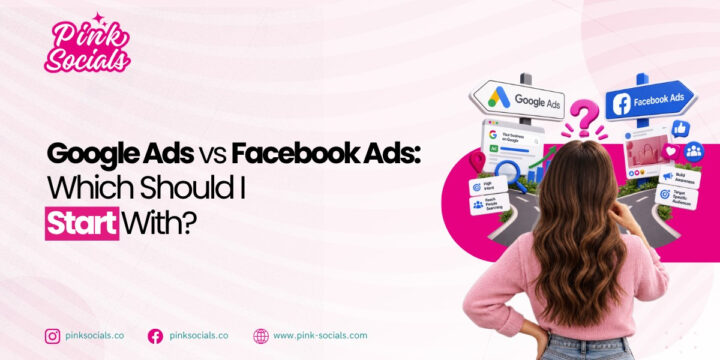
This is one reason it is useful to compare channels before deciding where your budget should go. If you are weighing demand creation against existing search intent, review Google Ads vs Facebook ads and consider how your customers actually discover your business.
| Targeting option | Best use | Audience warmth |
|---|---|---|
| Broad prospecting | Finding new potential customers | Cold |
| Location targeting | Local businesses | Cold |
| Customer lists | Existing customers | Warm |
| Website visitors | Re-engaging interested visitors | Warm |
| Social engagers | Reaching people who interacted with content | Warm |
| Product/cart visitors | Recovering buying intent | Hot |
The role of audience targeting is therefore not simply to make an audience small. It is to give the campaign enough relevance and useful signals while allowing the system room to find people likely to take action.
Ready to see what professional campaign management could cost? See pricing and compare the available plans before deciding what fits your budget.
What do Meta ads cost and how do I run them well?
Meta ad costs vary by audience, objective, competition, creative, and conversion quality, so there is no universal price that every small business should expect to pay.
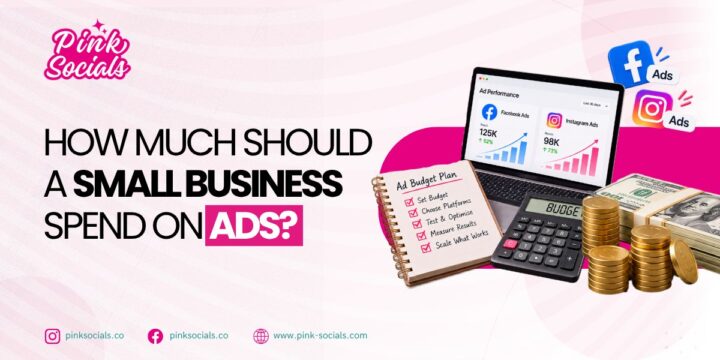
Before deciding how much to allocate each day, it helps to understand how much to spend on ads based on your customer value, margins, expected conversion rate, and available testing budget.
A useful way to think about cost is cost per result rather than simply cost per click.
For example, 500 cheap clicks are not valuable if they produce no enquiries. A smaller number of visitors that generate qualified leads can be much more commercially useful.
Real campaign data illustrates why benchmarks should be treated carefully. An Australian lead-generation provider currently reports that Facebook and Instagram lead-form campaigns average $8–$25 per lead across Australian markets, although the company notes that results vary by trade and location. This figure comes from its Australian lead generation service data, so it should be treated as an indicative provider-reported range rather than a universal Meta Ads benchmark.
Your own cost per result could be substantially higher or lower depending on your industry, location, offer, competition, audience, creative, and sales process. What matters most is whether the cost of generating a lead or sale makes commercial sense for your business.
How do I keep costs down?
Reducing costs is usually about improving the complete conversion path rather than chasing cheap clicks.
Start with:
- A clear offer
- Strong ad creative
- Several different creative concepts
- A relevant landing page or lead form
- Proper conversion tracking
- A clear campaign objective
- Regular performance reviews
The Humming Web case study is useful here because the campaign did not rely on one tactic. It combined audience research, multiple creative variations, lead forms, and ongoing optimization.
You should also know your break-even point.
If one customer is worth $1,000 in gross profit, a $100 qualified lead may be reasonable if your sales team converts those leads efficiently. If your average customer is worth $100, the same acquisition cost may not work.
Before increasing spend, understand the economics behind the campaign.
What should I track?
Track business outcomes rather than vanity metrics.
| Step | What to do | Metric to watch |
|---|---|---|
| 1 | Define the business goal | Leads or sales |
| 2 | Launch the campaign | Reach and delivery |
| 3 | Test creative | Click-through rate |
| 4 | Measure efficiency | Cost per result |
| 5 | Check lead quality | Qualified leads |
| 6 | Measure acquisition | Cost per customer |
| 7 | Assess profitability | Revenue or ROAS |
Your most important metric depends on your business model, but conversions should generally matter more than likes.
If your ads get clicks but your website does not generate enquiries, the problem may be after the ad. Before increasing spend, review what makes a website convert so more visitors are not simply being sent into the same conversion problem.
Where does Instagram fit?
Instagram advertising can be especially useful when visuals help explain your product, service, results, or brand.
Reels, Stories, carousels, demonstrations, testimonials, and user-generated content can all give prospects a quick reason to pay attention.
The important point is that Instagram is not a shortcut around the fundamentals. Your offer still needs to be clear. Your ad creative still needs to attract attention. Your audience still needs to be relevant, and your tracking needs to tell you whether people are taking meaningful actions.
Paid advertising is only one part of a wider social strategy, so it is also worth considering does social media marketing work for your business when organic content, community engagement, and paid campaigns need to support the same commercial goals.
Professional discussion on LinkedIn reflects this shift. In a 2026 post, digital marketing manager Tude Merta argued that advertisers were spending too much time obsessing over targeting while overlooking creative quality, and recommended testing distinct creative concepts rather than repeatedly producing variations of the same ad. You can read the discussion in full on
That is useful social proof, but it should be treated as practitioner experience rather than independent research.
If you want campaign setup, creative testing, tracking, and optimization handled for you, have Meta ads managed for you and keep your attention on running the business.
What does real-world experience say?
Case studies can help show what is possible, but they should never be treated as guaranteed outcomes.
The Australian Humming Web campaign reported 106 qualified leads at $36.10 per lead after seven months, while its wider case-study portfolio reports campaigns across multiple industries with different lead costs and outcomes.
Owner and advertiser discussions on Reddit are more mixed, which is important context.
In a June 2026 discussion on r/FacebookAds, one small-business advertiser asked whether Meta ads were still worth the investment, explaining that they had a limited budget and were considering spending thousands on learning and testing. One respondent described Meta as still performing extremely well, while another said it remained the strongest channel for certain industries and funnels.
There are also negative experiences. A July 2026 Reddit discussion from an advertiser with years of Meta experience described worsening profitability and higher effort required to maintain results.
The contrast is valuable. It shows why the answer cannot simply be “Facebook ads work” or “Facebook ads do not work.” Results vary according to the business model, economics, creative, offer, campaign structure, tracking, and execution.
Ready to take your paid social strategy further? See our full range of services to explore the marketing support available for your business.
Conclusion
Facebook and Instagram ads can still be effective for small businesses, but they are not a shortcut around a weak offer, poor creative, or a website that fails to convert.
The strongest campaigns start with the customer and the offer, then build the advertising around measurable business outcomes. Paid social is particularly useful for creating demand, while retargeting can bring previously engaged prospects back into the buying journey.
Focus on relevant audience targeting, strong ad creative, useful conversions, and your actual cost per result rather than judging a campaign by likes or reach alone.
If you need help deciding whether Meta advertising fits your business and how to structure it around measurable outcomes, Pink Socials can help.
Leave a Reply