
The Best Way to Generate Leads Online (Small Business)
While it’s important to get traffic to your website, the majority of online advice ends at that point and doesn’t explain how to actually capture and convert that traffic into leads you can sell.
This guide is designed to teach you the most effective methods to generate leads online , which sources are effective for small businesses, how to capture leads and how quickly follow-up will convert leads to customers. Many owners don’t realize how important speed is. Research published in Harvard Business Review found that firms that contacted a new lead within an hour were nearly seven times more likely to qualify it than those who waited even one hour longer, and more than 60 times more likely than firms that waited a full day, which is exactly why the capture-and-follow-up side of lead generation matters as much as the traffic itself.
Here’s what this covers:
- The lead sources that actually work
- How to capture leads, not just traffic
- Why follow-up speed decides who wins
- How to build a steady lead flow
What is the best way to generate leads online?
The most effective way to get leads online is to pair a source of intent traffic (SEO, local search or paid traffic) with a focused capture page and quick follow-up. Without capture and speed, there are no visitors, but only traffic.
Once that formula is in place, it becomes a repeatable process instead of a matter of hoping the phone rings. Most small businesses will only solve one aspect of it, typically the traffic aspect and then wonder why the few visitors don’t convert into an inquiry.
Lead generation isn’t the only thing either, and if you’re treating it as an isolated project, that’s a typical cause of it stalling. It’s one of the digital marketing services a small business needs, along with the website, paid ads, and SEO, and it’s often the case that simply addressing the traffic side of the equation doesn’t solve the real issue below it.
The paid ads are typically the quickest of the three sources to get started, but getting them running doesn’t necessarily mean they’ll get you a return quickly. But before you invest real money in them, you might want to ask yourself are paid ads worth it for your business, as ads can generate leads rapidly but only if the capture page and subsequent follow-up behind it are solid enough to use them effectively.
Which lead source is best?
The one that corresponds to the urgency of your customers. Local search and paid ads work best for people who are ready to act now and are looking for an urgent solution. For both sources, the landing pages that are optimised for a particular offer perform better than a generic homepage, and SEO leads and content create a more consistent, long-term stream of leads.
Why is capture the missing piece?
Traffic that doesn’t have a clear path to becoming a lead just goes away. If someone reads your page and then closes the tab, that was a visitor, not a lead, no matter how well you did in that month.
| Source | Speed | Cost | Best fit |
|---|---|---|---|
| Local search / Google Business Profile | Fast | Low | Urgent, local needs |
| Paid ads | Fast | Ongoing spend | Urgent needs, testing offers |
| SEO / organic content | Slow to build | Time investment | Steady, long-term flow |
| Referrals and reviews | Medium | Low | Trust-sensitive services |
| Social media | Medium | Low to moderate | Visibility and brand-building |
Using only one lead source? Get in touch with us, and we’ll help you find the right combination for your business.
How do I capture leads instead of just getting traffic?
You get leads by directing traffic to a single page with a single offer and a simple form or call to action, and by providing a compelling reason for people to enter their information. That’s what turns an interest into a lead you can follow up on.
Most online leads for business start the same way: someone lands on a page, reads for a few seconds, and either takes an obvious next step or leaves. A capture page eliminates the leaving option, so that the leaving visitor has only one thing to do, rather than a dozen menu links to distract him from the task at hand.
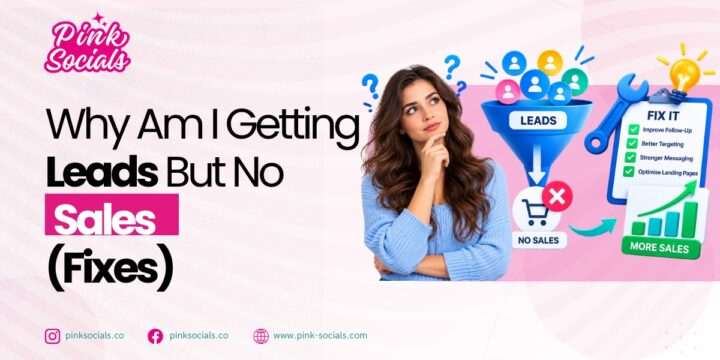
But that’s only half the story. There are plenty of businesses that get plenty of leads, and they still don’t see them turn into paying customers, and that’s often the reason why you get leads but no sales; the lead was never qualified or ready to buy in the first place, no matter how clean the capture page looked.
This is the same gap that shows up across a whole website, not just one campaign. If that sounds familiar, it’s worth understanding traffic but no customers as its own pattern, since the fixes overlap heavily with what makes a single capture page work or quietly fail.
Creating a working page to capture leads is typically not just a copywriting challenge, but a design and structure challenge. If you don’t have one constructed yet, you can see our web design service to have a page designed specifically to generate leads rather than attempting to use a homepage for a purpose it was never intended.
What is a capture page?
A page designed for one action and not a general home page that has too much going on. It makes one offer, filters out distractions and provides one thing for visitors to do next.
What makes people share details?
An offer that is valuable and easy to complete with little risk. When the information they exchange feels like it is beneficial to them, and the form itself doesn’t feel like a burden to fill out, they will exchange information with each other.
| Element | Purpose | Tip |
|---|---|---|
| One clear offer | Gives visitors a reason to act | State the benefit, not just “contact us” |
| Short form | Lowers the effort to convert | Ask only for what you need to follow up |
| Visible call to action | Removes any guesswork | Repeat it near the top and the bottom |
| Trust signals | Reduces hesitation before sharing details | Add a review, guarantee, or real contact info |
| No distractions | Keeps attention on one action | Remove navigation and unrelated links |
Why does follow-up speed decide whether leads convert?
Follow-up speed is the key to converting leads; go cold quick! The business that replies within minutes always gets the job done, and it is as much about lead volume as well as quick systems and automation.
Speed to lead is one of the most underrated levers in the entire process. A lead that came in five minutes ago is still thinking about you. A three-hour-old lead is likely to have been followed up by someone else, and a slow follow-up can negate all the work the traffic and capture page did.
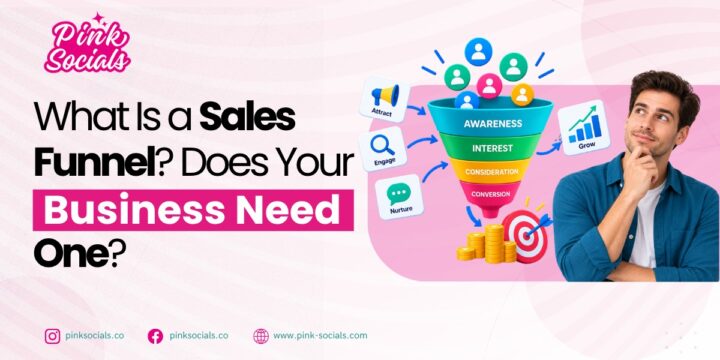
None of this happens in isolation, either. A single fast reply is really just the first step inside a longer sales funnel, and what a sales funnel is determines how that first response should actually be handled, since a five-minute callback means something different for a small job than it does for a large, considered purchase.
This is exactly where automation earns its keep. A small team can’t monitor the inbox all day, but How AI can help your business covers the types of tools that can respond immediately, qualify a lead and schedule a call before a human can even get on the phone.
Lead generation strategies typically converge or diverge on their own at the point of getting all three components to work together: the source, the capture page, and the fast follow-up. If you prefer to have that built and running rather than build it yourself, you can see how lead generation is set up for you, covering the sources, the pages, and the systems that catch leads while they’re still warm, not weeks after they first showed interest.
None of this needs to be guesswork on your end, either. If you want a clear plan instead of trial and error, it’s straightforward to get a lead-gen plan for your business built around your actual sources, your capacity to follow up, and how fast your team can realistically respond to a new one.
How fast should I respond?
Within minutes, not hours. One of the biggest factors in whether a lead will convert or not is the response time, and sometimes it’s more important than the quality of the lead.
How do I respond that fast?
The systems and automation, such as AI tools, are such that a lead isn’t just waiting for someone to realize that a new message has arrived.
| Response time | Likely outcome |
|---|---|
| Within 5 minutes | Highest chance of qualifying the lead |
| Within 1 hour | Still strong, meaningfully better than waiting |
| A few hours | Noticeably lower odds, competitors may already be ahead |
| Next day or later | Lead has often already moved on |
Conclusion
The three essential components of online lead generation are intent traffic from a source that is suitable for your business, a targeted capture page that converts visitors to contacts, and quick follow-up that converts contacts to customers. Traffic alone was never the goal. It’s only the first of three steps, and sometimes more volume is not as important as speed once a lead actually comes in.
If you’d rather have that built and running for you, Pink Socials can help.
Leave a Reply