
What Is a Sales Funnel? Does Your Business Need One?
The term sales funnel rings with marketing speak and sounds like a complicated, costly solution, which is why a lot of small business owners think it’s out of reach and miss out on leads that a straightforward sales funnel could grab.
Before getting into the weeds of how to build a low-tech sales funnel to convert visitors into customers, this guide outlines what is a sales funnel and whether or not your small business needs one. Even for a one-man business, this is a concept that should be considered. Research covered in Harvard Business Review found that companies with a clearly defined, formal sales process see about 18% more revenue growth than those without one, and a funnel is really just the simplest version of that kind of process, scaled down to fit a business with one person answering the phone instead of a whole sales floor.
Here’s what this covers:
- What a sales funnel actually is
- The stages from stranger to customer
- Whether your business needs one
- How to build a simple funnel
What is a sales funnel?
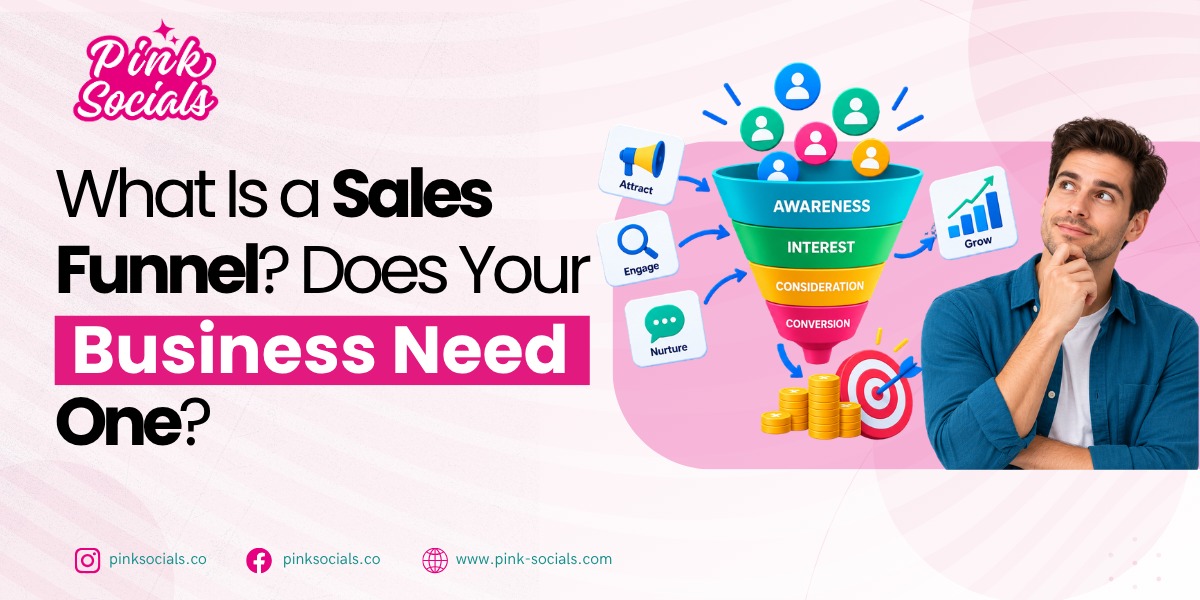
A sales funnel is the process a person goes through from when they first hear about you to when they become a customer, usually awareness, consideration, and decision, and it’s designed to guide the person through the process; don’t expect them to do it on their own.
Imagine the shape of the funnel as it’s wide at the top and narrow at the bottom. Many people are in the awareness stage they just know you’re there; fewer are in the consideration stage; they’re comparing you to others; and even fewer are in the decision stage; they’re ready to make a purchase. This is already occurring in some form in every business, planned or not.
An everyday example makes this concrete. Someone finds your business through a search; that’s awareness. They read a couple of pages and look at your reviews; that’s consideration. They complete a contact form or call; that’s decision. None of this happens by accident; it usually traces back to a source that attracts the right kind of visitor, which is really what the best way to generate leads online comes down to: pairing the traffic side of the funnel with the capture and follow-up that carries someone the rest of the way.
A website typically loses someone in the middle of the funnel, consideration, or does its job. A visitor who lands on a page that doesn’t make the next step obvious will simply leave, no matter how good the traffic was. That’s really what makes a website convert: a page built to hold someone’s attention and point to a clear action is what turns a funnel stage from a leak into a step forward.
Why is it called a funnel?
People start at the top, and fewer and fewer make it through each step to the bottom where they make a purchase. People begin at the top, and, naturally, fewer progress down through the steps to the bottom where they buy.
Is a funnel just for big companies?
No, even a single-page site with a short follow-up sequence is a working funnel; it’s a small informal one.
| Stage | What the person needs | Your job |
|---|---|---|
| Awareness | A reason to notice you exist | Show up where they’re already looking, search, ads, or referrals |
| Consideration | Proof you’re a credible option | Give clear information, reviews, and an easy way to compare |
| Decision | A simple, low-risk next step | Make the offer and the action obvious |
Not certain which section of your funnel is leaking? Get in touch, and we can help you determine where people are dropping off without making changes.
Does my small business actually need a sales funnel?
If leads are falling through the cracks or purchasing your products sporadically, your small business requires a sales funnel, as it provides each lead a clear next step; however, it doesn’t need to be complicated and may be achieved without expensive software.
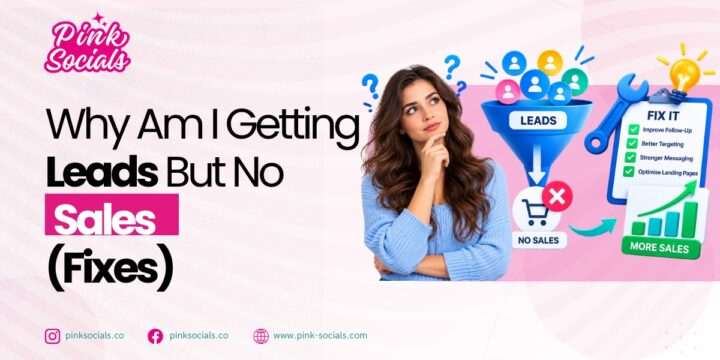
If leads are already coming in but sales aren’t following, the problem is rarely the traffic itself. It’s typically one of the steps in the funnel that’s failing, typically the middle or end. This is worth checking closely, because why you get leads but no sales often comes down to a funnel with no consistent path from first contact to a decision, and the fix is almost always adding structure rather than adding more leads.
The good news is that fixing this rarely means overhauling everything at once. Learning how to build a sales funnel usually starts with finding whichever stage loses the most people, then tightening that one piece before moving to the next.
What are signs I need one?
Forgotten leads, inconsistent follow-up, and no clear next step after someone reaches out are the clearest signs a funnel is missing, not the source of leads itself.
Can a funnel be simple?
Yes. It’s sufficient to have one capture page and a brief follow-up sequence to begin, and the majority of the value is simply having something that is consistent at all.
| Situation | Does a funnel help? |
|---|---|
| Leads go cold after first contact | Yes, gives every lead a defined next step |
| Sales happen but unpredictably | Yes, adds consistency across every lead |
| You already convert nearly everyone who reaches out | Not urgent yet, a light version still helps |
| You get almost no leads at all | Traffic is likely the real problem first |
How do I build a simple sales funnel?
Create a basic funnel by bringing in the right traffic, directing them to a focused capture page, following them up with a short sequence and making the conversion step easy, each stage of the funnel will push a lead a little further towards becoming a customer.
These four pieces don’t have to be difficult. The traffic can be from a single source, the capture page can be a single landing page, and the follow-up can be three or four scheduled messages, rather than a lengthy campaign. In the case of sales funnel for small business, it is nearly always best to keep it simple, rather than complicated, because a simple one that actually performs is better than a complex one that never gets used.
Traffic is typically the first thing owners would like to resolve, and it can be useful to be intentional about the traffic that is coming in. Before spending on any one channel, it’s worth checking are paid ads worth it for your specific business, as ads can quickly fill the top of a funnel, but won’t really drive results unless the follow-up funnel is ready.
The capture page is typically the most important, and it’s also the most likely to be misdone. If you don’t have a page that’s designed to capture someone’s attention and lead them to one action, and you don’t want to take the chance that you’ll be able to repurpose your homepage to do several things at once, see our Web Design service to build a landing page around one offer.
Email follow-up, even a short automated sequence of three or four messages, is what carries most leads from consideration into decision. A little lead nurturing here goes a long way, since most people don’t buy on the first visit. They buy after being reminded a few times.
What is the smallest useful funnel?
Traffic from one steady source, a focused capture page, a short follow-up sequence, and a clear, low-friction offer. That combination alone is a complete, working funnel.
How do I improve it over time?
Repair the stage with the highest number of players dropped off first, then the next highest, etc. Making little tweaks to the funnel over time is better than attempting to redesign the entire funnel.
| Stage | Tool | Action |
|---|---|---|
| Traffic | One steady source | Pick search, ads, or referrals and commit before adding more |
| Capture | A focused landing page | Build around a single offer and one clear action |
| Follow-up | A short email or text sequence | Send three to four messages over one to two weeks |
| Decision | A low-friction next step | Make booking or buying obvious and easy |
All of this doesn’t have to be developed by yourself. You can see a simple funnel built for your business, rather than trying to assemble different tools and figuring out the sequence in which to use them, or which one is worth paying for first.
Before making any changes, it may be worthwhile to discuss your funnel with you if you still aren’t sure where it’s leaking or if you even have one at this time. You can map your funnel with an expert and have a clear idea of which part of your funnel needs your attention first, rather than taking a guess at a funnel rebuild that could end up being a rebuild of the wrong part of your funnel.
Is your website helping your sales funnel convert? See our Web Design service and turn more visitors into leads.
Conclusion
A sales funnel is simply the path from stranger to customer: awareness, consideration, decision, and the majority of small businesses can benefit from having even a simple, lightweight version of one. It doesn’t require much to get going: one regular traffic source, one focused page and a brief follow-up sequence is all it takes to get the basics. Then the next logical step is to make incremental changes rather than making a complicated structure.
If you’d rather have that built and running for you, Pink Socials can help.
Leave a Reply