
Why Am I Getting Leads But No Sales? (Fixes)
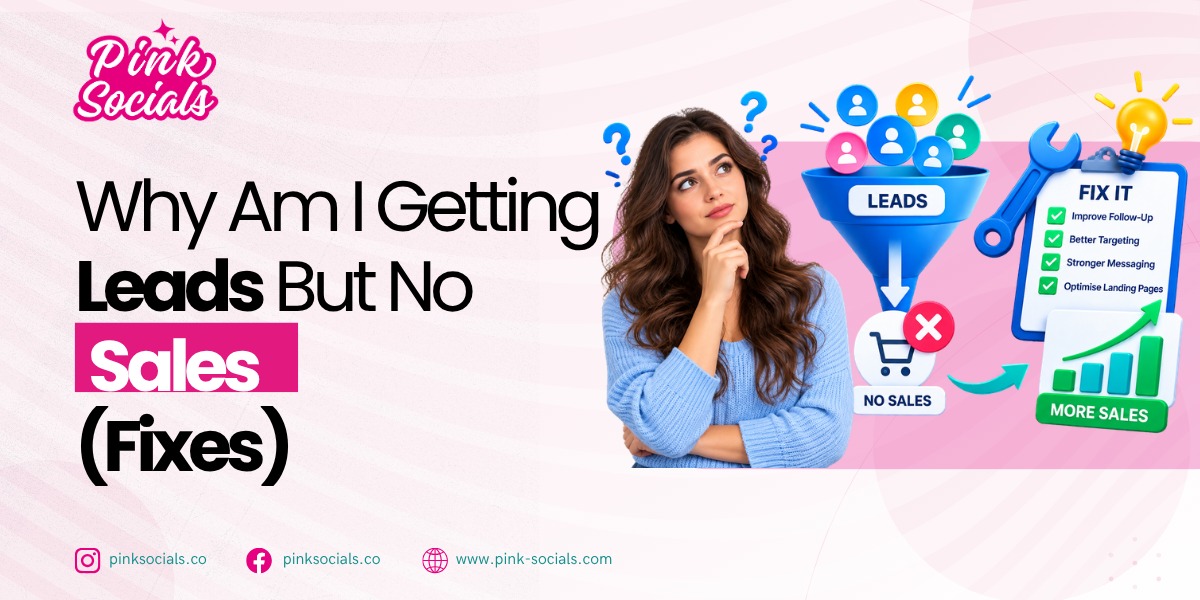
When you have a lot of leads coming in, and sales aren’t moving, there’s a certain frustration that comes with it. The marketing looks like it’s working, the inquiries keep showing up, and yet something between that first contact and a signed deal keeps quietly failing.
This guide explains why you are getting leads but no sales, and why there are 3 reasons for this: Lead Quality, Follow-Up Speed and a Lack of Sales Process. This difference is well known and widely observed. A study published in the Journal of Marketing found that 70% of leads generated by marketing departments are never pursued by sales representatives at all, which means for a lot of businesses, the leak isn’t in the marketing at all. It’s what happens the very moment a lead enters someone’s mailbox.
Here’s what this covers:
- Whether your leads are the right leads
- How slow follow-up kills conversions
- The sales-process gaps that lose deals
- How to fix the leak
Why am I getting leads but no sales?
No sales happen because leads are poorly qualified, you don’t follow up with them quickly enough, or there is no consistent process to follow a lead to a decision, and each of those leaks is in a different place.
When you read that list, most owners know a little of all three, but it is seldom a business’s fault for all three. Lead quality issues typically come back to the way the lead was generated in the first place, the targeting they were generated from, the offer they were presented with, or the source that attracts browsers rather than buyers. If you’re looking to see the bigger picture of how traffic, capture and follow-up should work together, the best way to generate leads online walks through the sources and systems that are meant to feed sales in the first place; this will help you identify where your own pipeline is failing.
There are also two types of problems: quality and process, which require different remedies, so separating them early is helpful. Quality problems are typically addressed through more focused targeting or a brief qualification process prior to when a lead ever enters your inbox, and process problems require a clear next step and a person to follow it up. The problem is that it wastes time on a fix that never will solve the real leak.
Here, it is important that the source of the lead is known as well. If your capture page or your home page is not designed to filter and convert visitors before they even get to your form, then no matter how fast you fix that upstream issue, it will appear as a lead quality issue when you get to sales, so it’s worth looking at what makes a website convert before you assume that the issue is your call script or your CRM.
Are my leads even qualified?
Mostly, when you use cheap or broad lead sources, you’re getting a lot of leads that you know you won’t convert, regardless of how well you follow up. Look for fit before you are looking at anything else; a weak lead may appear the same on paper as one that is good.
Is it a follow-up problem?
The problem is not the leads themselves; it’s the speed and consistency in which they’re going cold. Once a qualified buyer gives up on you, they’re not a lead anymore.
| Symptom | Cause | Fix |
|---|---|---|
| Lots of leads, few real conversations | Leads aren’t qualified | Tighten targeting and add a short qualifying question |
| Leads go cold after first contact | Follow-up is too slow | Respond within minutes, automate the first reply |
| Conversations stall after one exchange | No follow-up sequence | Build a short, scheduled multi-touch sequence |
| Leads quietly disappear | No tracking system | Use even a basic CRM or spreadsheet |
| Same objections keep killing deals | No defined next step | Write down the sales process, however simple |
How much does slow follow-up cost me?
Many leads will purchase from the first person to respond, and slow follow-up means you lose the bulk of your winnable deals, so responding in minutes rather than hours or days can make a huge difference in the number of leads who convert to sales.
Speed to lead is one of the biggest levers in the entire pipeline, and it’s also one of the more fixable ones once you see it clearly. If you receive a lead while the business is open and no one returns the call for three or four hours, it’s probably already been passed on to the first competitor that answered the phone or filled out the form. When not all your team can be on every channel 24/7, see how fast AI follow-up closes more leads. If an automated response can grab a lead’s attention just long enough for a real person to respond, you’ve got a better chance of winning their business.
Why does first responder win?
Buyers tend to choose the first business to respond to them, and the easiest path to go through, rather than who has offered the best product or price. Sometimes it is better to be fastest rather than cheapest.
How do I never miss a lead?
AI answering and automated instant replies hold a lead’s attention as soon as they send a message, rather than letting them wait hours for someone to reply.
| Response time | Likely outcome |
|---|---|
| Within 5 minutes | Highest chance of a real conversation |
| Within 1 hour | Still solid, most leads haven’t moved on yet |
| Same day | Meaningfully lower odds, competitors may already be ahead |
| Next day or later | Lead has typically already bought elsewhere |
This mostly has to do with coverage, not effort. If many leads are coming in through your website, you may want to see whether an AI chatbot can help you capture those who message you outside of business hours, which is the same issue as a missed follow-up, just on a different channel. Changing just one or the other of these pieces is typically sufficient to improve lead conversion without any other lead acquisition changes.
|
Losing leads simply because nobody answered fast enough? Book your free consultation, and we’ll show you exactly where follow-up speed is costing you deals. Free, fast, no obligation. |
What sales-process gaps lose deals?
A process that is not clearly defined after initial contact, no follow-up sequence, and no easy method to follow up on leads result in lost deals, and a simple tracking and a light, consistent process can help recover sales that are slipping away.
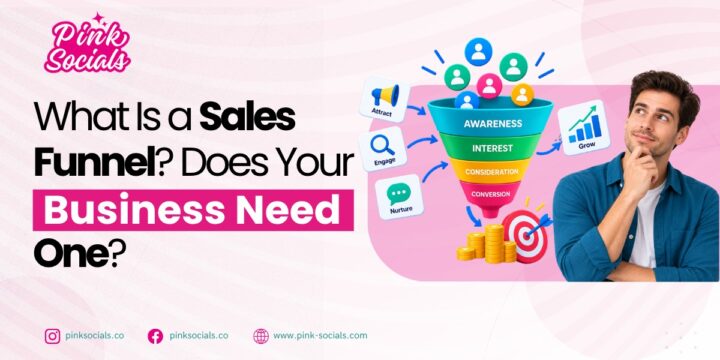
The process doesn’t have to be elaborate; it just has to be there and followed when a new lead is received. If you can explain what a sales funnel is and whether you need one, it may help here, as a funnel is nothing more than a name given to the series of steps a lead should take from initial contact to a closed sale, and most small businesses lack at least one of these steps.
Leads not converting is often less about any single conversation and more about nobody owning what happens next. Even a simple or free CRM can eliminate most of that guesswork by assigning a next step to each lead and a deadline to it, rather than having to rely on memory or a piece of paper.
What is a minimum viable process?
A clear next step following each contact, a brief follow-up process, and a single place to follow up with each lead. Most of the gap can be closed with nothing more complex.
Do I need a CRM?
Even a simple one helps, primarily because it will prevent leads from being forgotten. A CRM doesn’t have to be costly and complicated to prevent deals from slipping away.
| Gap | Effect | Fix |
|---|---|---|
| No defined next step | Leads sit in limbo after first contact | Write down the exact next action for every stage |
| No follow-up sequence | One unanswered message ends the conversation | Set three to five scheduled touchpoints |
| No lead tracking | Leads get forgotten or duplicated | Use even a basic spreadsheet or CRM |
| No clear ownership | No one is accountable for a stalled lead | Assign every lead a single owner |
Sometimes the gap isn’t only internal process; it’s what happens on the site before a lead ever reaches your inbox. When your capture pages are not designed to lead people to one next action, you can see our Web Design service to make sure that any page you create does that.
None of this has to be guesswork on your end, either. If you’d rather have a straight, honest read on where your own pipeline is actually leaking, you can get help fixing your pipeline instead of trying to diagnose lead quality, follow-up speed, and process gaps all at the same time on your own.
Conclusion
There are only three reasons why you can get leads but not sales: Your leads aren’t a good fit, your follow-up is late, or There’s no process getting leads to a decision. All of these can be corrected individually, and often the sale of a single one of these can bring back a sale that was quietly slipping away. The first thing to do is to determine if your leads are qualified or not, as speed and process optimizations cannot help a lead who wasn’t going to buy in the first place.
If you’d rather have your pipeline reviewed than guess where the leak is, Pink Socials can help.
Leave a Reply